
Caviar has long been synonymous with luxury, indulgence, and gourmet sophistication. While most people associate it with sturgeon roe from the Caspian and Black Seas, there are several varieties on the market today, each with its distinct flavor, texture, and rarity. Among these, Kaluga caviar has emerged as a premium choice, often compared to the legendary Beluga caviar. But what sets Kaluga apart from other caviar types, and why is it gaining attention from chefs and connoisseurs alike?
Origins and Species
Kaluga caviar comes from the Kaluga sturgeon (Huso dauricus), a massive freshwater fish native to the Amur River basin in China and Russia. This sturgeon is closely related to the Beluga sturgeon, and the similarity in size and breeding patterns contributes to the premium quality of its roe. In comparison, other popular caviars—like Sevruga, Osetra, and Beluga—come from distinct species with different habitats:
- Beluga caviar is from the Beluga sturgeon, primarily in the Caspian Sea.
- Osetra caviar comes from the Russian sturgeon, known for its nutty flavor.
- Sevruga caviar is harvested from the smaller Sevruga sturgeon, producing smaller, more intense-tasting eggs.
Kaluga sturgeon can weigh over 1,000 pounds and live for decades, which allows the roe to develop a rich, buttery flavor similar to Beluga but with unique nuances that make it stand out.
Flavor Profile
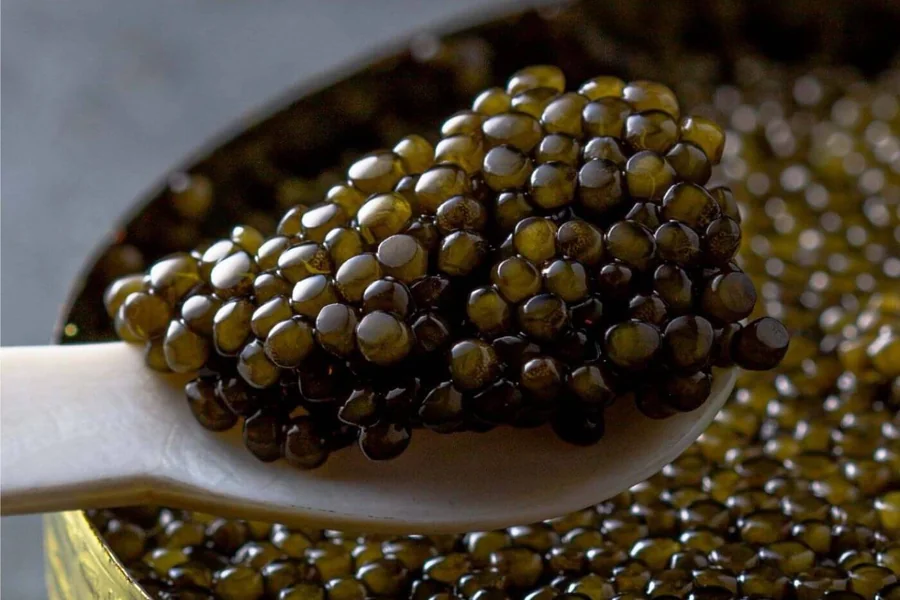
The most notable difference between Kaluga caviar and other types lies in its flavor. While Beluga caviar is prized for its mild, creamy, and slightly nutty taste, Kaluga caviar offers a more robust and complex flavor without being overly fishy. Its eggs are large, firm, and glisten with a golden to dark gray hue, making them visually striking as well as gastronomically appealing.
Osetra caviar tends to have a nutty, earthy flavor, while Sevruga is more briny and intense. Kaluga strikes a balance: it is rich like Beluga but carries a subtle depth and umami character that can complement a wide range of dishes. For gourmets who find Beluga too mild, Kaluga provides a satisfying alternative.
Texture and Size
Texture is another defining factor. Kaluga caviar boasts large, firm eggs that “pop” delicately in the mouth, delivering a creamy, luxurious sensation. This textural quality is similar to Beluga, which is why some chefs use Kaluga as a Beluga substitute when the latter is unavailable due to stricter regulations.
In comparison:
- Osetra eggs are medium-sized and slightly firmer, offering a distinct bite.
- Sevruga eggs are small and delicate, melting quickly on the tongue.
Kaluga’s combination of size and firmness creates an experience that feels indulgent yet refined, appealing to those who appreciate both texture and flavor in caviar.
Sustainability and Availability
One reason Kaluga caviar has gained popularity is its sustainable production. Overfishing and habitat loss have placed species like the Beluga sturgeon on endangered lists, making their caviar increasingly rare and expensive. Kaluga sturgeon, on the other hand, has been successfully farmed in aquaculture facilities, particularly in China. These farms mimic natural river conditions, allowing the fish to mature and produce high-quality roe without the ecological impact of wild harvesting.
This sustainability makes Kaluga not only a gourmet choice but also an ethical one, appealing to modern consumers who prioritize environmentally conscious food sources.
Culinary Uses
Kaluga caviar’s versatility in cuisine further enhances its appeal. It pairs beautifully with classic accompaniments like blinis, crème fraîche, and chilled vodka or Champagne. However, its richer flavor allows chefs to experiment, adding it to sushi, seafood tartares, and even creamy pasta dishes. Unlike Sevruga, which can dominate subtle flavors, Kaluga’s balance complements rather than overwhelms, making it a favorite for innovative culinary presentations.
Price and Luxury Status
While not as expensive as authentic Beluga caviar, Kaluga remains a luxury product. Prices vary depending on grade and origin, but it is generally more affordable than Beluga while offering comparable size, flavor, and texture. For many, this makes Kaluga a more accessible way to enjoy a premium caviar experience without compromising quality.
Conclusion
Kaluga caviar stands out in the world of gourmet roe for its combination of large, firm eggs, rich and complex flavor, sustainable production, and culinary versatility. While Beluga, Osetra, and Sevruga each have their distinct characteristics and loyal followings, Kaluga has carved out a niche as a luxurious yet ethically sourced alternative that doesn’t compromise on taste or texture. Whether served traditionally or in innovative dishes, it offers a unique caviar experience that is both indulgent and responsible—a rare combination in the world of fine dining.
