
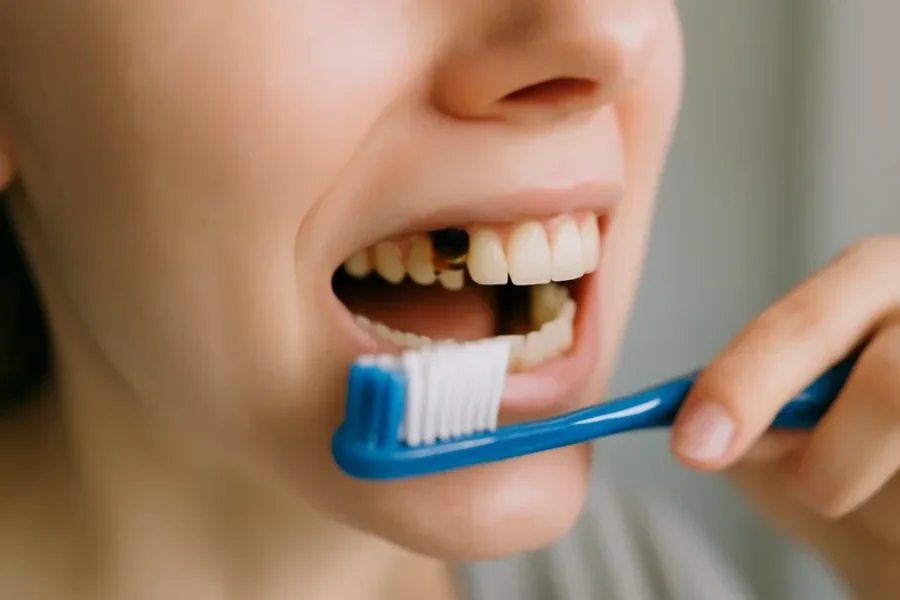
Many people assume that brushing twice a day is enough to prevent cavities completely. When decay still develops, it can feel confusing and unfair, especially for someone who believes they already have a solid routine. The truth is that cavities do not form based on brushing alone. They develop through a mix of bacteria, food choices, saliva flow, tooth shape, brushing technique, and timing throughout the day. A person may be consistent with brushing and still miss important factors that allow plaque and acid to remain active. That is why regular brushing helps a lot, but it does not always eliminate all the conditions that cause tooth decay.
Other factors matter too.
1. Brushing Technique May Not Clean Every Surface
One major reason some people still get cavities is that regular brushing does not always mean effective brushing. A person may brush every morning and night without actually cleaning along the gumline, between the teeth, or around the back molars where plaque tends to collect. If brushing is rushed, too gentle in some areas, or focused only on the front teeth, harmful buildup can remain day after day. Over time, that plaque interacts with sugars and starches in food, producing acids that weaken enamel and create the conditions for decay. Tooth shape matters too. Some people have deeper grooves and tighter spaces that are harder to clean with a toothbrush alone. Even a high-quality toothbrush cannot fully reach the narrow contact points where cavities often begin. This is one reason regular flossing and attention to hard-to-reach areas matter so much. People who are trying to avoid future dental work sometimes seek advice from the best dentist in Abbotsford. However, the deeper issue is often that their daily brushing habit feels consistent yet still leaves behind plaque, causing slow, repeated enamel damage.
2. Diet and Snacking Can Outweigh Good Brushing Habits
Another reason cavities can develop despite regular brushing is that teeth may be exposed to acid-producing foods and drinks far more often than people realize. It is not only about how much sugar someone eats but also about how often the teeth are challenged throughout the day. Sipping sweet coffee, drinking soda slowly, eating frequent snacks, or reaching for crackers and dried fruit between meals can keep the mouth in a repeated cycle of acid exposure. Even if a person brushes well in the morning and at night, their teeth may still spend hours in an environment that encourages enamel breakdown. Sticky foods are especially troublesome because they cling to the teeth and feed bacteria longer than foods that clear away quickly. Nighttime habits can make this worse if someone eats late and then goes to bed without giving saliva enough time to help neutralize acids. Brushing is important, but it cannot erase the effect of constant exposure between brushing sessions. Cavities often reflect the overall daily pattern of eating and drinking, not just whether a toothbrush was used at the expected times.
3. Saliva, Dry Mouth, and Body Chemistry Matter Too
Some people are more prone to cavities because their mouths do not protect their teeth as effectively as others’. Saliva plays a major role in washing away food particles, neutralizing acids, and helping the teeth recover from daily wear. When saliva flow is low, the mouth becomes much more susceptible to damage from bacteria and acids. Dry mouth can be linked to dehydration, mouth breathing, stress, aging, or medications taken for allergies, blood pressure, anxiety, or other common conditions. A person may brush faithfully and still face a higher risk of cavities simply because their mouth stays dry for long periods. Body chemistry also matters. Some people naturally have a higher amount of decay-causing bacteria or enamel that is more vulnerable in certain areas. Others may have gum recession that exposes softer root surfaces, which can decay more quickly than enamel-covered parts of the tooth. This explains why two people with similar brushing habits can have very different outcomes over time. Oral health is not only about effort. It is also shaped by the oral environment and how well it supports the teeth each day.
Beyond the daily mechanics of hygiene, the anatomical structure of your teeth often plays a silent role in how decay develops. Deep pits and narrow grooves on the chewing surfaces of molars can trap microscopic food particles that even the most rigorous brushing cannot reach. While at-home care is the first line of defense, a Dentist can identify these high-risk areas during a routine examination and may suggest preventive measures like dental sealants. This extra layer of protection effectively smooths out the tooth surface, making it much harder for plaque to find a permanent home. By addressing these physical vulnerabilities early, you significantly reduce the chance of persistent cavities forming in difficult-to-clean spots.
4. Prevention Requires More Than a Toothbrush
Another overlooked reason cavities persist is that brushing alone does not eliminate all risk factors unless it is combined with a broader prevention routine. Teeth often need support from flossing, fluoride exposure, routine cleanings, and early monitoring of areas that are beginning to weaken. Some cavities begin so quietly between teeth or under old dental work that a person may not notice any change until the damage is already established. Plaque that hardens into tartar cannot be brushed away at home, meaning even a disciplined person can still have buildup that promotes decay if cleanings are delayed. Fluoride also matters because it helps strengthen enamel and makes teeth more resistant to the acid attacks that happen every day. If a person brushes at the wrong time, skips flossing, avoids fluoride, or delays dental visits because nothing hurts, small problems can grow unnoticed. Cavities are often the result of several modest issues stacking together rather than one dramatic mistake. That is why a person can feel diligent and still end up surprised when decay appears during a routine checkup.
Why Brushing Does Not Guarantee Cavity-Free Teeth
Some people still get cavities with regular brushing because brushing is only one part of protecting the teeth. Technique, flossing, diet, dry mouth, saliva flow, fluoride, and the natural shape of the teeth all influence whether decay develops. A toothbrush can remove a lot, but it cannot fully protect teeth from frequent sugar exposure, tight contact points, or an oral environment that allows acids to stay active too long. Cavities usually form when several smaller factors work together over time. Understanding the bigger picture helps explain why brushing remains important, even if it’s not always enough on its own.
