

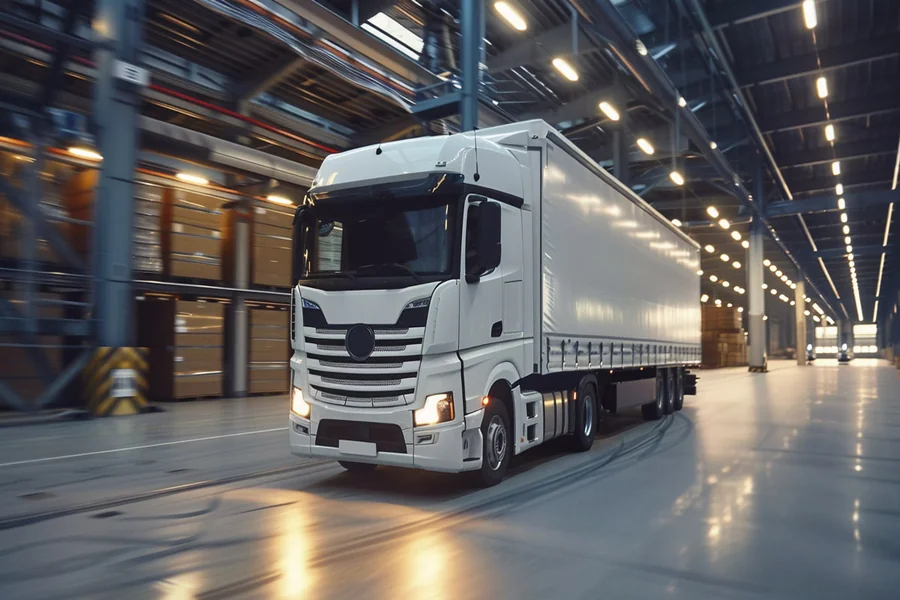
We will explore how less-than-truckload (LTL) freight companies coordinate complex logistics operations across major trade corridors, where timing, consolidation, and routing precision define operational success. These corridors connect manufacturing hubs, ports, and inland distribution centers, creating a continuous flow of goods that must be managed efficiently. Unlike full truckload shipping, LTL requires combining multiple shipments into one network while maintaining delivery timelines. This process involves structured planning, data-driven decisions, and synchronized movement across terminals. Understanding how these systems function offers insight into how goods move consistently across long distances without requiring dedicated trucks for each shipment.
Key Operational Stages in Managing LTL Freight Across Trade Corridors
-
Freight Consolidation and Origin Terminal Coordination
At the outset of any shipment, LTL freight companies focus on consolidation, the foundation of their operational model. Shipments from multiple clients are collected and brought to an origin terminal, where they are sorted by destination region. This stage requires careful planning because each shipment differs in size, weight, and delivery priority. Workers use freight classification systems and labeling protocols to ensure that each pallet or package is directed correctly within the network. The goal is to maximize trailer capacity while maintaining balance and safety standards.
By grouping shipments headed toward similar trade corridors, an LTL Freight Company reduces space utilization and improves cost efficiency. This step also involves scheduling pickups to align with departure timelines, ensuring freight enters the system without delay. The coordination between local pickup teams and terminal operations plays a critical role in maintaining consistency, especially in high-volume corridors with a continuous inflow of goods.
-
Linehaul Transportation Across Trade Routes
Once freight is consolidated, it enters the linehaul phase, which involves transporting goods between major terminals along trade corridors. These routes are often pre-defined based on demand patterns, infrastructure availability, and transit time requirements. LTL companies rely on scheduled departures, similar to public transportation systems, where trucks leave terminals at fixed times regardless of whether they are fully loaded. This approach ensures predictability and reliability across the network. Drivers follow designated routes that connect key economic regions, such as industrial zones and port cities.
During transit, companies monitor shipments using tracking systems that provide real-time visibility into location and estimated arrival times. This level of monitoring allows for quick adjustments if disruptions occur, such as weather conditions or road congestion. The linehaul stage is where distance is covered efficiently, and it forms the backbone of how LTL freight moves steadily across long trade corridors without requiring direct point-to-point transport for every shipment.
-
Hub-and-Spoke Terminal Transfers and Cross-Docking
As freight travels across corridors, it often passes through intermediate terminals known as hubs. These hubs serve as transfer points where shipments are unloaded, sorted, and reloaded onto different trucks bound for their final destinations. This process, commonly referred to as cross-docking, minimizes storage time and keeps freight moving continuously. At each hub, advanced sorting systems and operational workflows ensure that shipments are quickly redirected without unnecessary delays. The hub-and-spoke model allows LTL companies to manage a wide network of destinations while maintaining efficiency.
Instead of sending trucks directly from origin to every possible endpoint, freight is funneled through central hubs where it is redistributed. This structure reduces redundancy and optimizes route planning. It also enables companies to handle fluctuations in shipment volume, as freight can be rerouted through alternative hubs if needed. The ability to transfer goods seamlessly between routes is essential for maintaining flow across major trade corridors.
-
Final Mile Distribution and Destination Handling
After reaching the destination terminal, freight enters the final mile stage, where it is prepared for delivery to individual recipients. At this point, shipments are sorted again, this time based on local delivery routes. Drivers are assigned routes that consider geographic proximity, delivery windows, and traffic patterns. This stage requires coordination between dispatch teams and drivers to ensure timely deliveries while minimizing travel distance. Unlike long-haul transportation, final mile distribution involves navigating urban environments, which can present challenges such as limited access points or congestion.
LTL companies address these challenges by optimizing route planning and using smaller delivery vehicles when necessary. The destination terminal also serves as a checkpoint for verifying the condition of the shipment and its documentation before delivery. Ensuring accuracy at this stage is critical because it directly impacts customer satisfaction. By maintaining structured processes, companies ensure that freight reaches its endpoint in a predictable and organized manner.
-
Technology Integration and Network Optimization
Modern LTL operations depend heavily on technology to manage the complexity of moving freight across trade corridors. Transportation management systems (TMS) are used to plan routes, allocate resources, and track shipments throughout the network. These systems analyze data such as shipment volume, transit times, and route performance to improve efficiency. Real-time tracking tools provide visibility for both the company and its customers, enabling proactive communication in the event of delays.
Automation within terminals, including scanning and sorting systems, reduces manual errors and speeds up processing times. Additionally, predictive analytics help companies anticipate demand fluctuations and adjust capacity accordingly. By integrating technology into every stage of the operation, LTL providers create a responsive network that can adapt to changing conditions. This integration not only improves operational efficiency but also enhances reliability, which is essential for maintaining consistent movement across major trade corridors where timing and coordination are critical.
The movement of freight through LTL networks across major trade corridors relies on a structured sequence of interconnected processes. From consolidation at origin terminals to final mile delivery, each stage is designed to maintain flow while accommodating diverse shipment requirements. The use of hub-and-spoke systems, scheduled linehaul routes, and cross-docking ensures that goods move efficiently without unnecessary delays. Technology further strengthens these operations by providing visibility and enabling data-driven decisions. Together, these elements create a system that balances efficiency with flexibility, allowing LTL companies to handle varying shipment volumes across long distances. Understanding this process highlights the complexity behind everyday freight movement and the coordination required to keep trade corridors functioning smoothly.
