

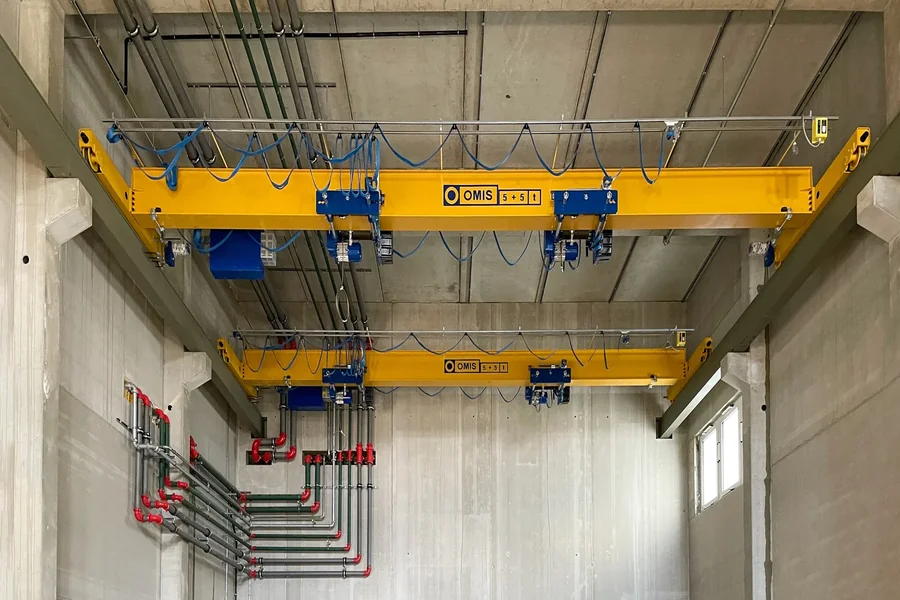
Single girder cranes are widely used across industrial environments due to their efficiency, compact structure, and adaptability to various lifting tasks. However, their functionality is closely tied to clearly defined load capacity limits that must never be overlooked. These limits are not arbitrary; they are determined through engineering calculations, material strength considerations, and safety protocols. We will explore how these limits are established, what factors influence them, and why respecting them is essential for operational safety and long-term equipment reliability. A clear understanding of load capacity ensures smoother workflows, minimizes risk, and supports consistent performance in demanding environments.
Key Factors That Define Load Capacity Limits in Single Girder Cranes
1. Structural Design and Material Strength
The load capacity of a single girder crane begins with its structural design, particularly the girder itself, which bears the majority of the load. In systems such as the single girder crane by HOJ Innovations, engineers determine capacity based on the type of steel used, its tensile strength, and how the girder is fabricated, whether as a rolled section or a welded box beam. The geometry of the girder, including its depth and width, directly affects how much weight it can handle without excessive deflection or stress. Overloading beyond this calculated limit can lead to deformation that may not be immediately visible but can accumulate over time. Additionally, repeated stress cycles can weaken the structure, increasing the likelihood of failure. This is why manufacturers provide clearly defined load ratings, ensuring that the crane operates within safe mechanical boundaries.
2. Hoist Mechanism and Lifting Components
Another critical factor is the hoist mechanism, which includes the motor, wire rope or chain, drum, and hook assembly. Each of these components has its own load-bearing capacity, and the overall system is only as strong as its weakest part. For instance, the wire rope must withstand both the load’s weight and the dynamic forces generated during lifting and lowering. Similarly, the motor must provide sufficient torque without overheating or experiencing excessive wear. If any component is subjected to loads beyond its rated capacity, it can fail unexpectedly, leading to safety hazards and operational downtime. Regular inspection and maintenance of these components are essential to ensure they continue to perform within their intended limits.
3. Span Length and Load Distribution
The span length of the crane, the distance between its supporting structures, plays a significant role in determining its load capacity. A longer span increases bending stress on the girder, reducing the maximum weight it can safely carry. This is because the load creates a moment force that becomes more pronounced as the distance increases. In addition to span length, how the load is distributed also matters. Concentrated loads placed at the center of the girder exert more stress compared to evenly distributed loads. Uneven loading can also cause torsional stress, which may compromise structural integrity. Understanding these dynamics helps operators position loads correctly and avoid unnecessary strain on the crane system.
4. Dynamic Forces and Operational Conditions
Load capacity is not solely about static weight; dynamic forces generated during crane operation must also be considered. When a load is lifted, moved, or stopped, additional forces such as acceleration, deceleration, and impact come into play. These forces can temporarily increase the effective load on the crane beyond its rated capacity. Environmental conditions, such as temperature, humidity, and wind (in outdoor applications), can further influence performance. For example, high temperatures may affect material strength, while wind can introduce lateral forces that destabilize the load. Operators must be aware of these variables and adjust their handling techniques accordingly to maintain safe working conditions.
5. Safety Factors and Regulatory Standards
To ensure reliability, engineers incorporate safety factors into the design of single girder cranes. This means that the crane is built to handle more than its rated load, providing a margin of safety under normal operating conditions. However, this margin is not intended for regular use but rather as a buffer against unexpected stresses. Regulatory standards and industry guidelines also play a role in defining load limits and testing requirements. Compliance with these standards ensures that cranes meet minimum safety criteria and are suitable for their intended applications. Regular load testing and certification help verify that the crane continues to perform within its specified limits over time.
6. Operator Awareness and Load Monitoring
Even with robust engineering and safety measures, the role of the operator remains crucial in maintaining load capacity limits. Operators must be trained to understand load charts, recognize warning signs of overloading, and use control systems effectively. Modern cranes often include load monitoring devices that provide real-time feedback, helping operators make informed decisions. Ignoring these indicators or relying on guesswork can lead to dangerous situations. Proper training, combined with a disciplined approach to operation, ensures that the crane is used within its designed capacity, reducing the risk of accidents and extending the lifespan of the equipment.
Understanding load capacity limits in single girder cranes is not just a technical requirement but a fundamental aspect of safe and efficient material handling. From structural design and component strength to operational dynamics and human factors, multiple elements interact to determine how much weight a crane can handle. By adhering to specified capacities, conducting regular inspections, and maintaining operator awareness, organizations can ensure reliable operations while minimizing risks. Ultimately, respecting load capacity limits supports both safety and productivity in industrial environments.
