

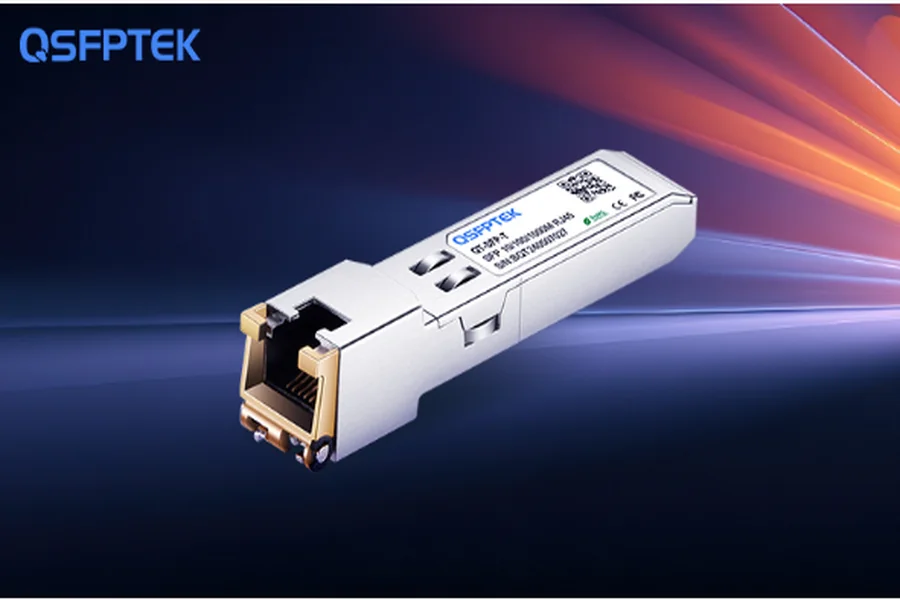
In modern enterprise IT discussions, 1G connectivity is often treated as outdated. Conversations tend to focus on 10G, 25G, or even higher speeds. However, in industrial and edge network environments, performance is not defined by raw bandwidth alone. Reliability, compatibility, and long-term stability matter far more—and this is where 1G-T SFP modules continue to play an important role.
Industrial and Edge Networks Are Built Differently
Unlike office or data center networks, industrial and edge environments are rarely standardized. They include factory floors, substations, transportation systems, warehouses, and remote facilities. Equipment in these environments often runs for years, sometimes decades, without major upgrades.
Many industrial devices, PLCs, sensors, controllers, cameras, and monitoring systems, still rely on copper Ethernet interfaces operating at 1Gbps or below. Replacing these endpoints simply to increase network speed is usually neither cost-effective nor necessary. 1G-T SFP modules allow modern switches to connect seamlessly with legacy copper-based equipment without forcing disruptive infrastructure changes.
Copper Ethernet Still Fits the Physical Reality
Industrial sites frequently lack structured fiber cabling. Copper Ethernet is easier to deploy, more forgiving during installation, and simpler to repair on-site. Running fiber in environments with vibration, dust, temperature variation, or mechanical stress often requires additional protection and higher installation costs.
1G-T SFP modules enable switches located in control rooms or edge cabinets to interface directly with existing copper runs. This flexibility is especially valuable when network topology is constrained by physical layout rather than design preference.
Reliability Matters More Than Speed
In industrial and edge networks, traffic patterns are typically predictable and low-bandwidth. Control signals, telemetry data, video monitoring, and management traffic rarely require more than 1Gbps per link. What matters most is consistent uptime.
1G-T SFP modules operate at well-understood signaling speeds with mature PHY designs. This maturity translates into stable link behavior, wide device compatibility, and fewer interoperability issues. For networks where failure can halt production or disrupt critical services, proven technology is often preferred over higher-speed alternatives.
Simplifying Network Design and Maintenance
Using SFP-based copper modules provides design flexibility that fixed RJ45 switch ports cannot. If a port fails or requirements change, the module can be replaced independently of the switch. This modularity simplifies maintenance in remote or unmanned locations where access is limited.
Additionally, industrial networks often separate data traffic from management or out-of-band networks. 1G-T SFP modules are commonly used to build these auxiliary networks, keeping them isolated, predictable, and easy to troubleshoot.
Power and Thermal Considerations at the Edge
While 1G-T SFP modules consume more power than optical SFPs, edge switches are usually deployed at lower port densities than data center equipment. In these environments, the thermal impact is manageable, especially when balanced against the benefits of copper compatibility.
For ruggedized or industrial-grade switches designed to operate across wide temperature ranges, 1G-T SFP modules fit well within supported operating envelopes.
Conclusion
Industrial and edge networks are shaped by real-world constraints, not idealized designs. In these environments, 1G-T SFP modules continue to provide a practical, reliable, and cost-effective way to connect legacy copper devices to modern switching infrastructure. While higher speeds dominate data centers, 1G-T remains a quiet but essential building block where stability and compatibility matter most.
