
Introduction
Copper Naphthenate is a popular wood preservative, which has been in use over the decades to prevent the decay of timber, fungal growth as well as infestation by insects etc. With the continuing distribution of wood as a widely used construction material, as well as in agricultural and outdoor activities, the necessity of a good preservation becomes critical. This compound offers a very sound alternative since it will go deep into the wood and will provide a shield against environmental hazards. It is also long-lasting without causing a significant change in the look of the wood thus it makes a good option that can be used both as a structure and as an appearance.
What is Copper Naphthenate
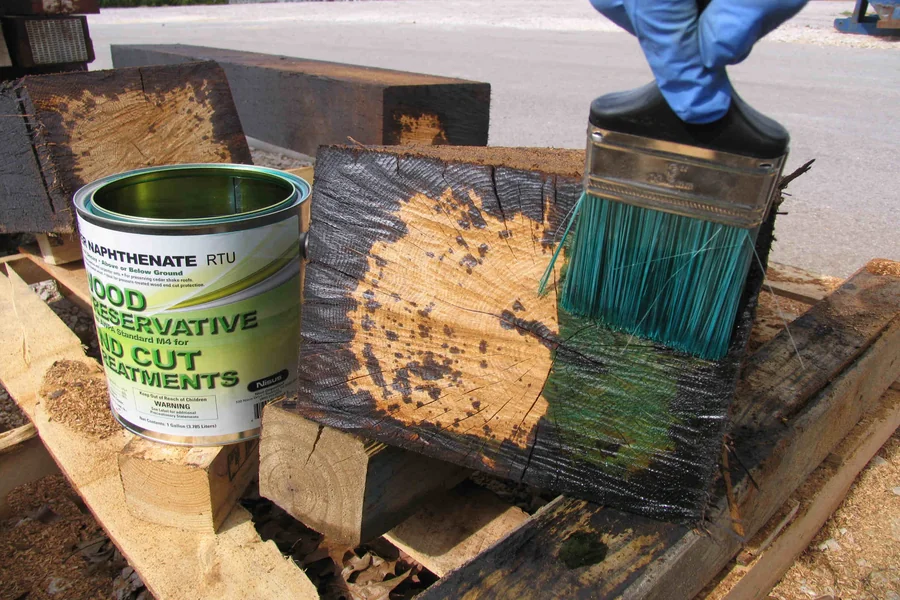
Copper Naphthenate is a copper-preservative that is dissolved in a petroleum or oil-based carrier. Its mechanism of action includes the addition of copper to the fibers of wood which acts as a toxic agent against fungus and insects that can cause deterioration. This treatment is generally accepted to have a greenish colour though some formulations are made in the light colour or nearly transparent as per the usage.
The compound has frequently been used in place of more poisonous wood preservatives, which offered a trade-off between its effectiveness and less environmentally-toxic characteristics. It is particularly used in those applications where very long-term durability is necessary, e.g., utility poles, fence posts, and outdoor structures. Due to the oil quality of it it is also resistant to water, and it helps the wood endure the multiple harsh weather conditions.
The Major Advantages and Applications
The first and one of the key benefits of this preservative is that it provides an excellent opportunity to extend the lifetime of wood many times. It is used to stop rot and decay due to moisture and microorganisms as these are the common factors of rot and decay in outdoor setting. This is best suited to those structure that are in contact with the ground or that is highly humid.
Its other significant advantage is that it can be used to fight insects, such as termites and wood-boring beetles. It helps lower maintenance expenses and eliminates form of structural damages as time goes by by preventing that wood is infested. It is extensively applied in the farm application with barns, fencing and storage buildings where it is important to have it last quite long.
Copper Naphthenate is not only easy to apply. It may be used by brushing, dipping or pressure treatment depending on the degree of protection that needs to be achieved. This flexibility has seen it be applicable to both large- scale application in industries and smaller projects used by DIYers. It, further, forms powerful bonds with wood poletoppers com fibers, and this means its long-term protecting even in adverse situations.
How It Enhances the Longevity of Woods
By itself wood is susceptible to the weather elements, most particularly when it is subjected to moisture and biological life. This preservative combats these weaknesses by ensuring an anti-fungal antiflora covering insects and inhibiting their activities. It has been demonstrated to penetrate a long way into the wood when applied and in this way, the decay agents will not thrive.
The other factor contributing to its increase of longevity is that it does not experience leaching. Oil-based preservatives also last longer in the wood structure as compared to their water-based counterparts which may wash out. This guarantees that protection is constant and does not have to be applied frequently.
It is also used in the treatment of wood in order to retain the structural integrity of wood. It can mitigate risk of cracking, warping, and weakening by avoiding internal damage. It is also very crucial to load-bearing structures the safety and stability of which are critical.
Environmental and Safety considerations
Although Copper Naphthenate is neither as hazardous as certain older preservatives nor as hazardous as commonly believed by most individuals, it is still quite dangerous to handle. There should be proper application methods and safety precautions to ensure that the unnecessary exposure is not caused. The use of protective clothing like gloves and masks is advisable in the process.
Environmentally, it is usually considered a more acceptable option since it is not only without arsenic or chromium (which are often identified with more damaging treatments) but is also considered generally less toxic than several other treatments. But in any case, it must be used in a responsible manner, particularly when it is close to water bodies or delicate ecosystems.
The local regulations should also govern disposal of treated wood. Although it is not so toxic, proper treatment of wood should not be burnt or rather disposed, as it may cause negative effects on the environment.
Selecting and Implementing the correct treatment
The appropriate formulation to make depends on the purpose of the wood. In heavy-duty applications (utility poles or marine structures), higher concentration of preservative may be needed in pressure-treated wood. In smaller projects such as garden furniture or fences, the treatment could be adequate in the form of brush-on or dip.
The most important part of the best results is preparation. To achieve this, the surface on which the wood is to be applied must be clean and dry prior to application since correct application would result in proper absorption. Several coats can be requested to offer the greatest protection particularly in high exposure locations.
Also a good thing to remember is to have adequate drying time to allow satisfactory drying of the applied substance. This will make sure that the preservative will harden and will offer the best protection possible. Regular check-ups can be used to identify areas which might require re-treatment with time.
Final Thought
The effectiveness, longevity and versatility make copper Naphthenate a reliable option for wood preservation. It is very resistant to deterioration and insects and is also very easy to use in diverse applications. Its application either in an industrial environment or in a smaller project aids in lengthening the lifespan of wood and decreasing costs of long-term maintenance. Users gain confidence in using it in the reliable and enduring results when they understand how it works and use it correctly to achieve the intended results.
FAQs
What is Copper Naphthenate used for?
It is used as a wood preservative to protect against decay, fungi, and insect damage.
Is Copper Naphthenate safe to use?
It is relatively safer than older preservatives but should still be handled with proper safety precautions.
Can it be used for outdoor wood?
Yes, it is highly effective for outdoor applications due to its resistance to moisture and environmental conditions.
How long does the protection last?
The protection can last for many years depending on the application method and environmental exposure.
Does it change the appearance of wood?
It may give wood a slight greenish tint, although some formulations are less noticeable.
