
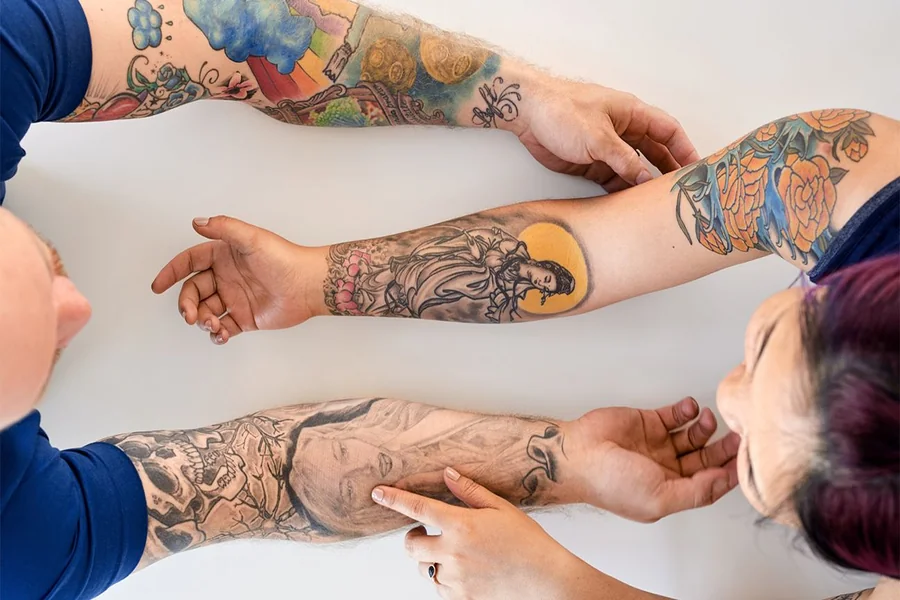
A tattoo does not heal the same way on every person, even when the design, placement, ink, and aftercare routine look nearly identical. Skin type changes how the body responds to the tattooing process from the first session through the final settled appearance months later. Oil levels, dryness, sensitivity, texture, and natural pigment all influence how the skin holds ink, how much irritation develops, and how evenly the surface recovers. That is why two tattoos done with the same skill can still age differently. Understanding skin type helps explain why healing speed, sharpness, saturation, and long-term clarity are never completely one-size-fits-all.
Healing and appearance factors
-
Oily, Dry, and Sensitive Skin Heals Differently
Skin type affects tattoo healing because the skin is not just a surface for artwork; it is the living material that must recover from repeated needle passes while stably holding pigment. Oily skin can make stencil transfer more difficult during the session and may sometimes soften the crisp look of very fine details as the tattoo settles. Dry skin brings a different challenge, since it can flake more heavily, feel tighter during healing, and make the area appear dull or uneven until moisture balance improves. Sensitive skin may become redder, stay irritated longer, or react more strongly to friction, shaving, or some aftercare products. These differences do not mean one skin type is good and another is bad for tattooing. They mean the healing process has to be understood in context. Artists and clients often achieve better long-term results when skin condition is considered before the appointment, rather than only after the tattoo is finished. Studios that also work with body art clients, such as Austin Piercing, often see how much the skin’s response can shape the final look, even when aftercare instructions are followed closely. When people assume all skin heals the same way, they often misunderstand why one tattoo settles cleanly while another needs more patience, touch-up work, or adjusted expectations.
-
Texture, Thickness, and Pigment Change the Final Look
Skin type also shapes final appearance because tattoos do not sit on a perfectly uniform canvas. Some people have smoother skin with a more even surface, while others have visible texture, larger pores, thicker areas, or regions that naturally produce more friction. That affects how lines appear once the skin calms down and how evenly shading seems to sit beneath the surface. A tattoo may look bold on the day it is done, then soften or settle differently as the skin rebuilds itself during healing. Thicker skin in certain body areas may hold saturation differently from thinner skin, and textured skin can change how crisp small details appear from a normal viewing distance. Natural skin pigment matters too, not as a problem, but as an important part of how colors and contrast will read after healing. Darker, lighter, warm, cool, and uneven undertones all influence how ink is perceived once the tattoo becomes part of the skin rather than fresh pigment near the surface. This is why realistic expectations matter. The goal is not to force every tattoo to look identical across every skin type. The goal is to understand how the skin’s living qualities will shape clarity, contrast, and softness over time.
-
Skin Type Influences Aftercare and Aging
Aftercare matters for everyone, but skin type often determines which parts of healing need the most attention. Dry skin may need careful moisturizing to prevent cracking and excessive peeling, which can make the tattoo look rough during recovery. Oily skin may need a lighter approach so the area does not feel overcoated or irritated by heavy products. Sensitive skin often benefits from simpler routines with fewer fragrance- or reactive-ingredient products. Beyond the initial healing period, skin type also plays a role in how tattoos age. Skin that is frequently dry, sun-exposed, inflamed, or prone to irritation may cause a tattoo to lose its freshness more quickly if it is not cared for consistently. Areas with ongoing friction can fade unevenly, and skin that scars easily may change the smoothness of the healed result. Even lifestyle factors such as sweating, climate, and product use interact with skin type to affect the tattoo’s settled appearance. This is why long-term tattoo quality is not only about the day of the appointment. It depends on how well the skin continues to support the artwork after the open-healing phase ends. A tattoo lives inside changing skin, and that relationship keeps shaping the result long after the peeling stops.
Good Tattoo Results Depend on Real Skin
Skin type affects tattoo healing and final appearance because it influences how the body receives, recovers from, and retains the artwork over time. Oiliness, dryness, sensitivity, texture, thickness, and natural pigmentation all influence the healing process and how the tattoo ultimately reads once settled. That does not make tattoo outcomes unpredictable, but it does make them personal. Strong results come from understanding the skin in front of the artist rather than expecting every tattoo to behave the same way. When skin type is respected from the beginning, healing becomes easier to manage, and the final appearance tends to feel more consistent, balanced, and true to the design.
