
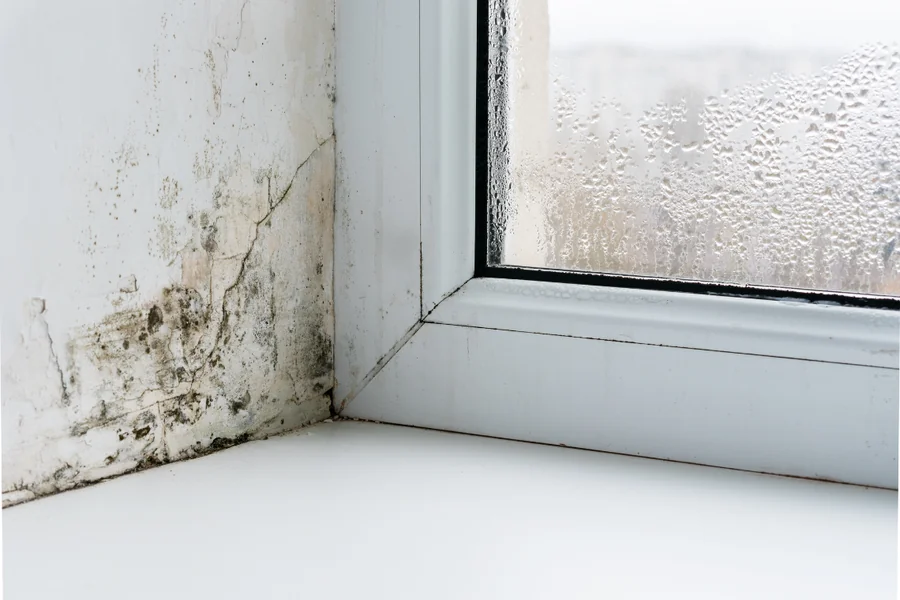
New windows and doors are often installed to improve comfort, reduce outside air leaks, and give a home a cleaner, more updated appearance. When moisture starts showing up around those new openings, homeowners may assume the product itself is defective. In many cases, the issue is more complicated. Water stains, damp trim, fogging, peeling paint, or soft drywall can develop when installation details, airflow conditions, and indoor humidity are not fully addressed. Moisture problems around new units are rarely caused by one factor alone. They usually come from a combination of water intrusion, condensation, and hidden gaps that allow damp air to collect where it should not.
Moisture Trouble Spots
1. Poor Sealing Around the Opening Can Let Water In
One of the most common causes of moisture problems around newly installed windows and doors is incomplete sealing around the rough opening. A new unit may look tight and finished from the inside, but moisture can still enter if flashing, house wrap integration, or perimeter sealants were not handled correctly. Rainwater does not need a large gap to become a problem. It only takes a small opening at the top edge, side joint, or sill area for water to move behind the trim and into nearby wall materials. Once that happens, the moisture may stay hidden for days or weeks before staining becomes visible indoors. Improper slope at the sill can also prevent water from draining as intended, causing it to collect around the framing instead of moving outward. In older homes, the surrounding wall may already have uneven surfaces or damaged sheathing, which makes it harder to create a continuous barrier during installation. When the transition between the new frame and the existing structure is not managed carefully, water, driven by gravity and pressure, flows into the weakest spots and begins to affect wood, insulation, drywall, and paint long before the problem is noticed.
2. Condensation Can Be Mistaken for a Leak
Not every moisture issue around a new window or door is caused by rain getting in from outside. Sometimes the problem is condensation forming when warm indoor air meets cooler surfaces around the opening. This is especially common when indoor humidity remains high due to cooking, showering, drying clothes, or poor ventilation. Even a well-installed unit can collect moisture if humid air repeatedly gathers around cold glass edges, metal components, or poorly insulated trim areas. Homes that become tighter after replacement may actually hold more indoor moisture than before, which can make the problem seem new even though the real issue is air balance and humidity control.
In some cases, the framing pocket around the unit is not insulated well enough, so the interior finish surface becomes cool enough for water vapor to condense. Homeowners looking into Window Replacement in Portland, OR, often need to consider not only rain exposure but also how interior moisture behaves in a home that may already struggle with damp air during cooler months. When condensation runs down onto sills, trim, or adjacent drywall, it can look like a product failure even though the moisture is forming from inside the house rather than entering from outdoors.
3. Hidden Structural Conditions Can Keep the Area Damp
Moisture problems can also persist because the area around the new installation already had concealed damage before the work began. Older homes often have wall cavities with worn insulation, previous water staining, decayed framing, or small cracks in exterior materials that were never fully discovered. Replacing the window or door updates one visible part of the assembly, but it does not automatically correct every weakness in the surrounding wall. If siding joints, stucco edges, brick interfaces, or trim connections remain vulnerable, moisture can continue to move into the same area, making it appear as though the new installation caused the issue. The same is true when the old opening had rot or softness that was covered rather than fully repaired. Damp materials trapped around the new frame may dry very slowly, especially if airflow is limited or vapor cannot escape. That lingering moisture can then affect caulk lines, paint finishes, and nearby interior surfaces after the project is complete. In some homes, the leak path may even begin above the window or door and travel downward inside the wall before showing up around the opening. This makes the moisture seem local when the actual source is somewhere higher on the exterior shell.
Why New Installations Can Still Have Moisture Issues
Moisture problems around newly installed windows and doors usually come from more than one source. Water can enter through incomplete sealing, condensation can form from indoor humidity, and older wall conditions can continue affecting the area even after the unit is replaced. Finishing details also matter more than many homeowners expect. A new product may be part of the solution, but lasting dryness depends on how well the opening is integrated with the surrounding structure and how moisture is managed both inside and outside the home. When the full assembly is considered rather than only the visible frame, the reasons for staining, dampness, or condensation become much easier to understand and correct.
